Flat Feet in Children

Flat Feet in Children

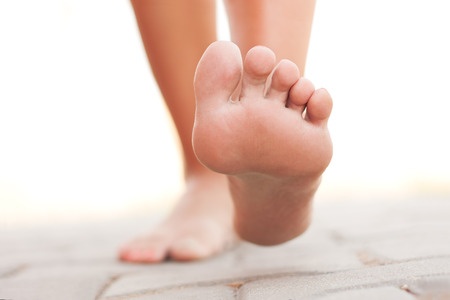
Having flat feet can be a problem. What is a flat foot? A flat foot is a foot without an arch. For a child, though, it is not uncommon. Flat feet also are known as Pes planus, is seen in 44% of 3 to 6-year-old children. By age 9, though, the arch usually develops, and the condition…
The Importance of Diabetic Footcare

The Importance of Diabetic Footcare

One of the most serious conditions a podiatrist has to contend with is diabetes. What is diabetes? Diabetes is a condition where your blood sugar or glucose levels are too high. Diabetes can cause nerve damage that in some cases, can lead to amputation. It is estimated that 100 million Americans suffer from diabetes. Symptoms of…

Treating Gout

Treating Gout

One of the most painful conditions a person can have is something called gout. Gout is the buildup of knife-life crystals found in uric acid. These crystals are carried to the soft parts of joints and inflict extreme pain reminding many of a throbbing broken bone. So sensitive is the affected area that the slightest touch can…

Hammering Out Hammertoes

Hammering Out Hammertoes

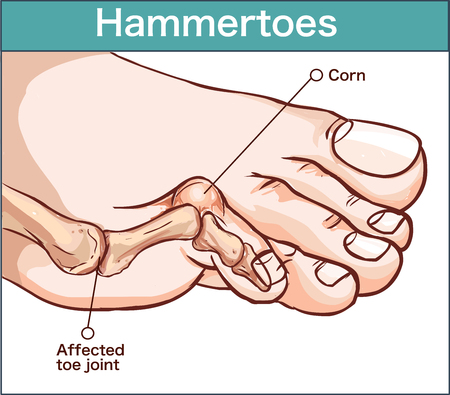
If one or more of the joints in your toes look like an inverted ‘v’, you may have something called a hammertoe.  What is a hammertoe? A hammertoe is when one or more of the joints in your second, third, or fourth toe is abnormally bent to one side. Hammertoes can be both painful and uncomfortable…

Summer 2019 Newsletter

Summer 2019 Newsletter

Click here to view our newsletter We produce a quarterly newsletter with foot health information and other helpful and valuable tidbits on a quarterly basis.  If you would like to receive these newsletters vi e-mail–and we promise not to flood your mailbox with other things, feel free to reach out to us via the link in the…

Basic Foot Care Tips for Healthy Feet

Basic Foot Care Tips for Healthy Feet

Keeping in good health requires constant effort, whether it is through regular exercise or a healthy diet. The same goes for your feet. Regular checkups with your Primary Care physician are essential, as are regular checkups with your podiatrist. While you may be able to detect many foot problems, your podiatrist is best qualified to diagnose any…

Identifying and Treating Calluses

Identifying and Treating Calluses

People often get calluses, and corns mixed up as both are the hardened area of the skin. Corns are smaller, painful, and usually have a hard center. Calluses typically develop on the bottom of your feet, where corns can be found in non-weight bearing parts of the foot like between toes. Traits of a Callus include: Hardened, thick…

Identifying and Treating Plantar Warts

Identifying and Treating Plantar Warts

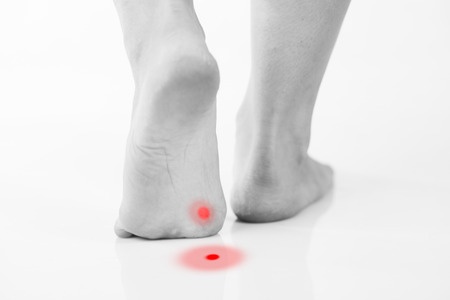
Sometimes foot problems can be misidentified causing the wrong treatment to be applied. Plantar warts are one such issue. Often taken for corns or calluses, a plantar wart is a small growth that appears on the heel or other weight-bearing surfaces of your feet.  Plantar warts are caused by the HPV virus or human papillomavirus that enters through cracks in your…

Ballet and Your Feet

Ballet and Your Feet

Dancing is one of man’s oldest activities. Either as a celebration or entertainment, dance has been around for many years. Some historical records show dance as an active part of a human culture dating as far back as 3300 B.C. in India and Egypt. Just where and when it began is unknown, but it would…

Nixing a Nagging Neuroma

Nixing a Nagging Neuroma

There are many things that can cause pain in your feet. One is called a Neuroma. A Neuroma is the thickening of the skin and irritation of a nerve between your toes. Neuromas can affect the ball of your feet and is usually found between your 3rd and 4th toes. This is also called Morton’s Neuroma. Symptoms of a…